Outgrowing Sitecore? Why Enterprise Teams Are Switching to Composable CMS
Thinking of switching from Sitecore? Discover how leading enterprises are trading suite complexity for composable flexibility, allowing for a tech stack of the best content tools.
An all-in-one CMS like Sitecore sounds great on paper, but in reality, enterprise content operations aren't one-size-fits-all. You want a scalable DAM for rich media, a structured PIM for complex product data, and a secure CRM, not to mention dedicated search, commerce, personalization, and analytics tools.
In enterprise tech, trying to be everything to everyone usually means being second-best at most of it.
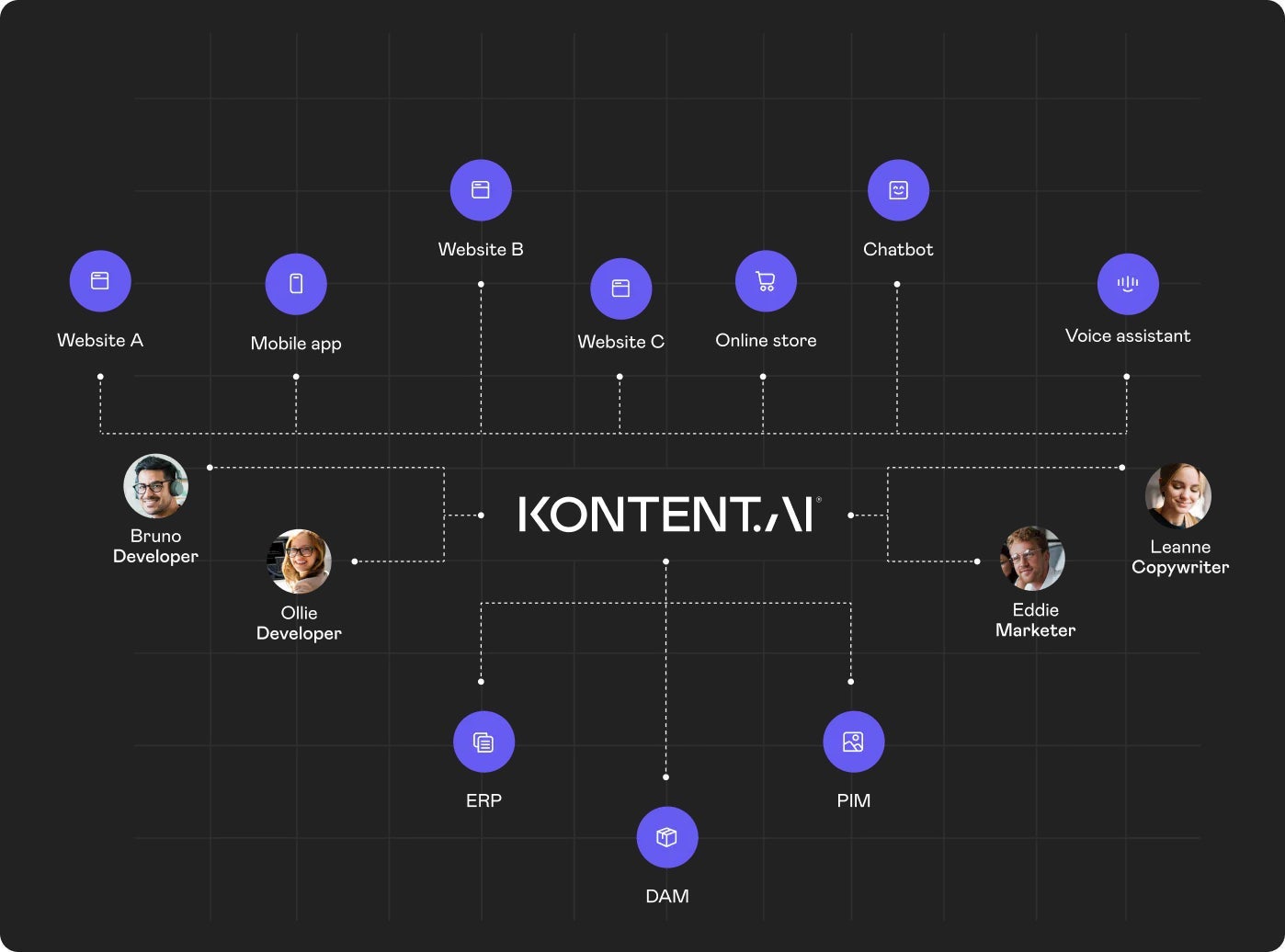
That's why we built Kontent.ai as a composable content engine, so you don't have to compromise on any tool in your stack, especially your CMS. Instead of asking one vendor, like Sitecore, to provide every capability, you can choose the best-of-breed tools for each part of your operation. Your technology stack can change as your business does, without forcing you to rethink everything around it.
How much of your tech stack should one vendor own?
Sitecore has built its platform around breadth. Its offering spans content management and digital experience capabilities, with SitecoreAI bringing together an increasingly broad set of products and AI capabilities.
That breadth can be valuable when you want one vendor to cover a large part of your digital experience stack. But it also creates a different question: How much of your technology stack do you actually want your CMS vendor to own?
For organizations already running Sitecore, that question can become particularly relevant when the platform changes underneath them:
Support model adjustments: As of June 1, 2026, extended support tiers, including production incident assistance and security updates, transitioned to paid services. This shift gives teams running legacy versions a clear reason to re-evaluate their long-term architecture.
Operational overhead: Verified buyer feedback on review platforms like G2 frequently highlights friction around platform cost, implementation complexity, and steep technical learning curves.
Platform transitions: XM Cloud customers were automatically rolled into SitecoreAI in late 2025. Customers still on Sitecore XP or XM face a separate, longer road: Sitecore's own documentation lists more than 20 features that don't carry over to SitecoreAI, and the underlying XP/XM platform itself is now in a multi-year transition to a new .NET architecture.
If your team is already facing a platform transition or support deadline, it is worth asking whether rebuilding those same single-vendor dependencies makes strategic sense.
Composability keeps your options open
Kontent.ai takes a different approach.
Rather than trying to turn the CMS into your DAM, PIM, search platform, commerce engine, analytics system, and every other tool your organization might need, Kontent.ai focuses on being the content platform that connects those systems.
With a composable architecture, you can choose the best tool for each part of your operation:
DAM: Bynder, Cloudinary, or Aprimo
PIM: Akeneo, Salsify, or inriver
Search: Algolia, Elasticsearch, or Coveo
Commerce: commercetools, Shopify, or BigCommerce
Personalization: Optimizely, Dynamic Yield, or VWO
Translation: Smartling, Phrase, or Lokalise
CRM: Salesforce, HubSpot, or Microsoft Dynamics 365
CDP: Twilio Segment, mParticle, or RudderStack
Developer and project workflows: GitHub, GitLab, Jira, Asana, Linear, and others
Hosting: Vercel, Netlify, or Cloudflare
The point isn't that every organization needs every tool. Your technology stack should reflect your business, not the product portfolio of your CMS vendor.
And because those tools can change, your architecture needs to accommodate change too. Read the full Sitecore vs. Kontent.ai comparison to see the difference.
When your stack changes, Kontent.ai can change with it
An API-first CMS gives your team room to adapt as the rest of your stack evolves.
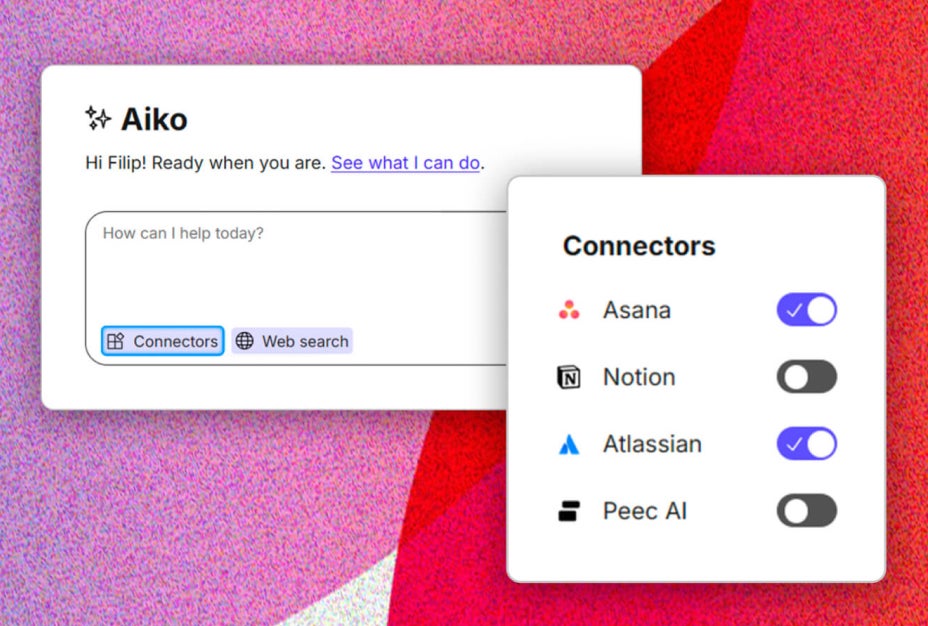
Kontent.ai also extends that approach through integrations and MCP connectors. MCP, or Model Context Protocol, provides an open standard for connecting AI agents with external tools. Kontent.ai's Aiko agent can use MCP connectors to access context and take actions across tools such as Asana, Confluence, Notion, Jira, Peec.ai, and other MCP-compatible systems.
That means the CMS doesn't have to contain every capability itself. Instead, it can work with the systems your teams already use.
This matters because you probably don't know which tools you'll want five years from now.
And you shouldn't have to.
AI should increase your stack flexibility, not vendor lock-in
The rapid adoption of enterprise AI makes the argument for composability stronger than ever. However, how platforms integrate AI reveals a fundamental difference in software philosophy.
Many monolithic suites like Sitecore treat AI as another mechanism to bind you to their proprietary platform. When AI capabilities can only process content trapped inside a single vendor's ecosystem, every automated workflow deepens your platform dependencies.
We take a fundamentally different approach: AI as an open orchestration layer across the specialized tools in your stack.
Through open standards like MCP, Kontent.ai enables Aiko (our general AI agent) and specialized Expert Agents to securely pull context and execute actions across your entire software ecosystem, not just inside the CMS editor.
Cross-system intelligence: Your AI agents can draw from project briefs in Jira, brand guidelines in Notion, and AI visibility signals in Peec.ai to assist with content creation and governance.
Preserved content governance: AI acts directly on structured content and native workflows, adhering to strict enterprise permissions and translation states without creating fragmented data silos.
Future-proof flexibility: You aren't tied to a single vendor’s proprietary AI roadmap. As new foundational models, LLMs, or specialized AI tools emerge, an open architecture lets you integrate them without re-architecting your CMS.
AI capabilities are changing far too quickly for any enterprise team to predict what tools they will need three years from now. Your CMS shouldn't force you to make that guess.
What if I'm already using Sitecore?
Moving away from Sitecore is a significant technology decision. We won't pretend otherwise.
However, a migration also presents a rare opportunity to eliminate years of accumulated technical debt. Rather than simply replicating old suite dependencies on a new platform, enterprise teams can separate core content management from specialized third-party services.
Kontent.ai simplifies this shift through flexible Management APIs and CLI tools that streamline content import and schema creation. As a true cloud-native SaaS platform, it removes the heavy server maintenance, manual upgrades, and infrastructure overhead associated with legacy CMS deployments.
Think of it like this: you’re not trading one CMS for another; you’re building an open content infrastructure that sets you up for whatever your tech stack needs in the future.
A CMS for what comes next
The case for composability isn't that every organization needs a different collection of tools.
It's that your organization will change, your technology stack will change, and the tools available to your teams will change with it.
Kontent.ai gives you a content platform built to work within that reality. Choose the best-of-breed tools that make sense for your business. Connect them to your content operation. Replace them when your needs change.
What if we told you there was a way to make your website a place that will always be relevant, no matter the season or the year? Two words—evergreen content. What does evergreen mean in marketing, and how do you make evergreen content? Let’s dive into it.
How can you create a cohesive experience for customers no matter what channel they’re on or what device they’re using? The answer is going omnichannel.
To structure a blog post, start with a strong headline, write a clear introduction, and break content into short paragraphs. Use descriptive subheadings, add visuals, and format for easy scanning. Don’t forget about linking and filling out the metadata. Want to go into more detail? Dive into this blog.
Lucie Simonova
Subscribe to the Kontent.ai newsletter
Get the hottest updates while they’re fresh! For more industry insights, follow our LinkedIn profile.